Research

Discover our research around transforming existing buildings,
urban building and climate modelling, and innovative energy system solutions.

Building physics

Decarbonising the existing building stock

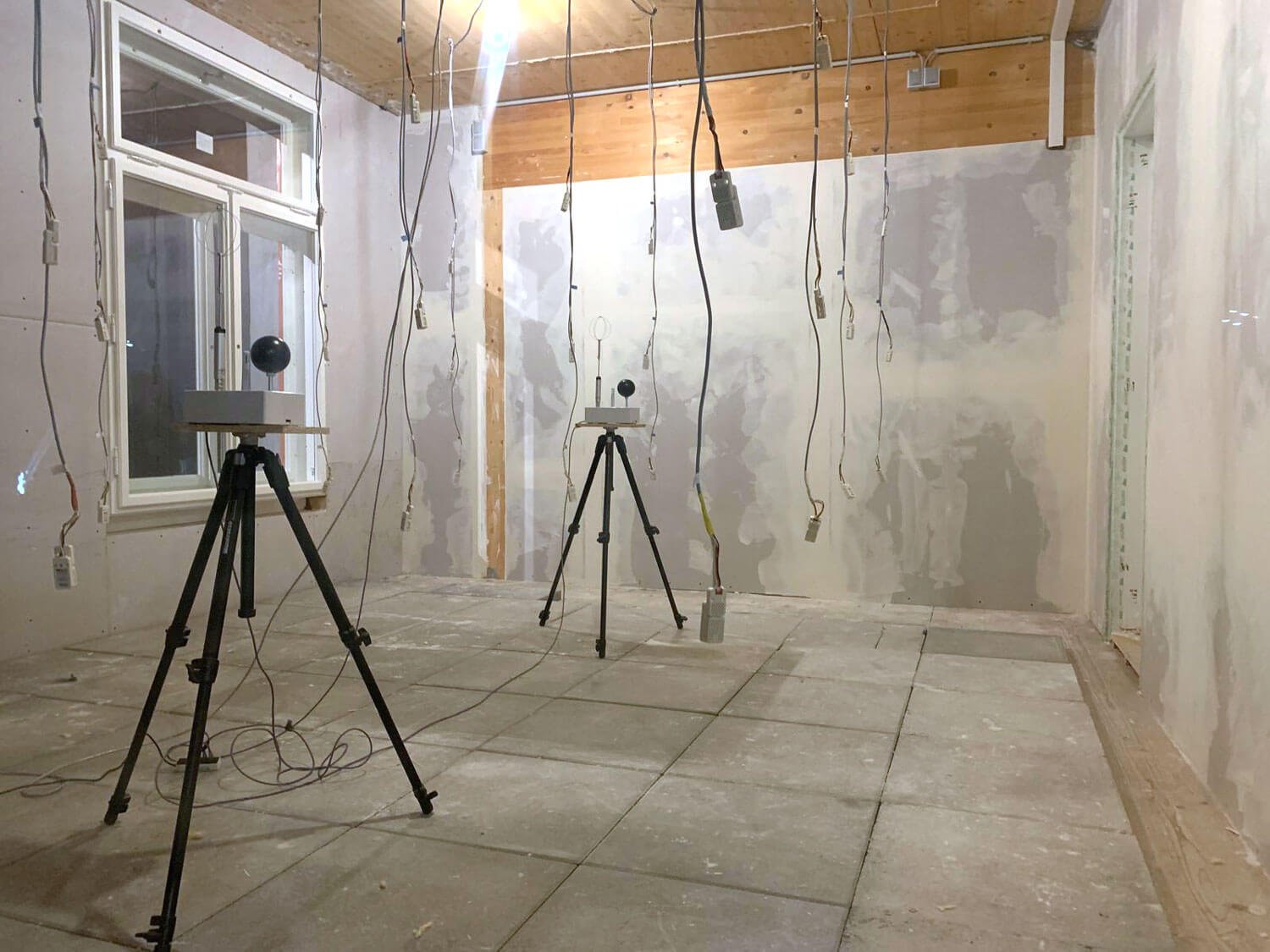
We develop innovative solutions to decarbonise existing buildings while enhancing thermal comfort and well-being. Our work combines physics-based, data-driven, and hybrid modelling approaches to identify effective retrofit solutions using a whole-life-cycle perspective that captures emissions from construction, operation, and end-of-life phases.

We apply advanced clustering and analytics to characterise typical building types, enabling scalable retrofit strategies for cities and national building stocks. This allows us to compare and optimise renovation pathways in terms of cost, resource use, and energy demand. Alongside technical measures, we integrate human-centric and sufficiency approaches to create retrofit strategies that are not only climate-effective and resource-efficient, but also supportive of healthier and more comfortable living environments.

Urban climate

From regional atmosphere to street-level microclimate

We model and analyse urban climates to anticipate how cities experience and respond to global climate change. Our research spans scales from the regional atmosphere to street-level microclimates, capturing the intricate processes that shape urban life. A central focus is the Urban Heat Island effect, which we study by merging data on the built environment, human activity and emissions (anthropogenic heat), and atmospheric processes.

One of our key challenges is integrating diverse data sources into accurate formats for simulation, a task we address by refining data processing, applying machine learning techniques, and optimising analysis to capture the reality of urban environments as closely as possible. These efforts allow a further exploration and testing of a range of adaptation and mitigation measures, tailored to specific urban contexts, while also assessing their potential, feasibility, and real impact on the environment and urban inhabitants.

Energy system solutions

Integrating renewables across buildings and districts

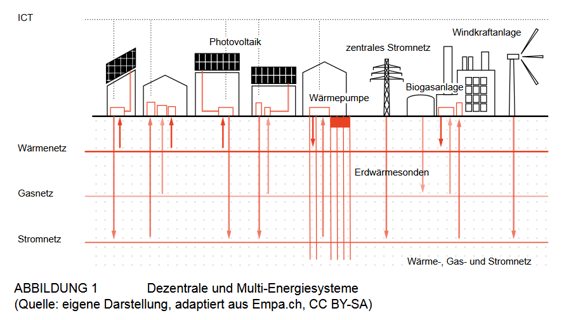
We develop and apply advanced energy system models to simulate, and optimize the flow of energy within and between buildings, districts, and cities. Our research focuses on integrating renewable energy sources, building and district scale systems, and sector coupling strategies to support the transition to carbon-neutral urban energy systems.

By combining physical modelling with data-driven and optimization-based approaches, we explore how decentralized and flexible energy systems can enhance efficiency, resilience, and self-sufficiency. A key aspect of our work lies in designing Positive Energy Districts, where local generation exceeds demand, contributing to a sustainable urban energy infrastructure. Through these models, we aim to bridge the gap between technological innovation, policy frameworks, and real-world implementation — enabling decision-makers to design future-proof energy solutions for buildings and cities.